

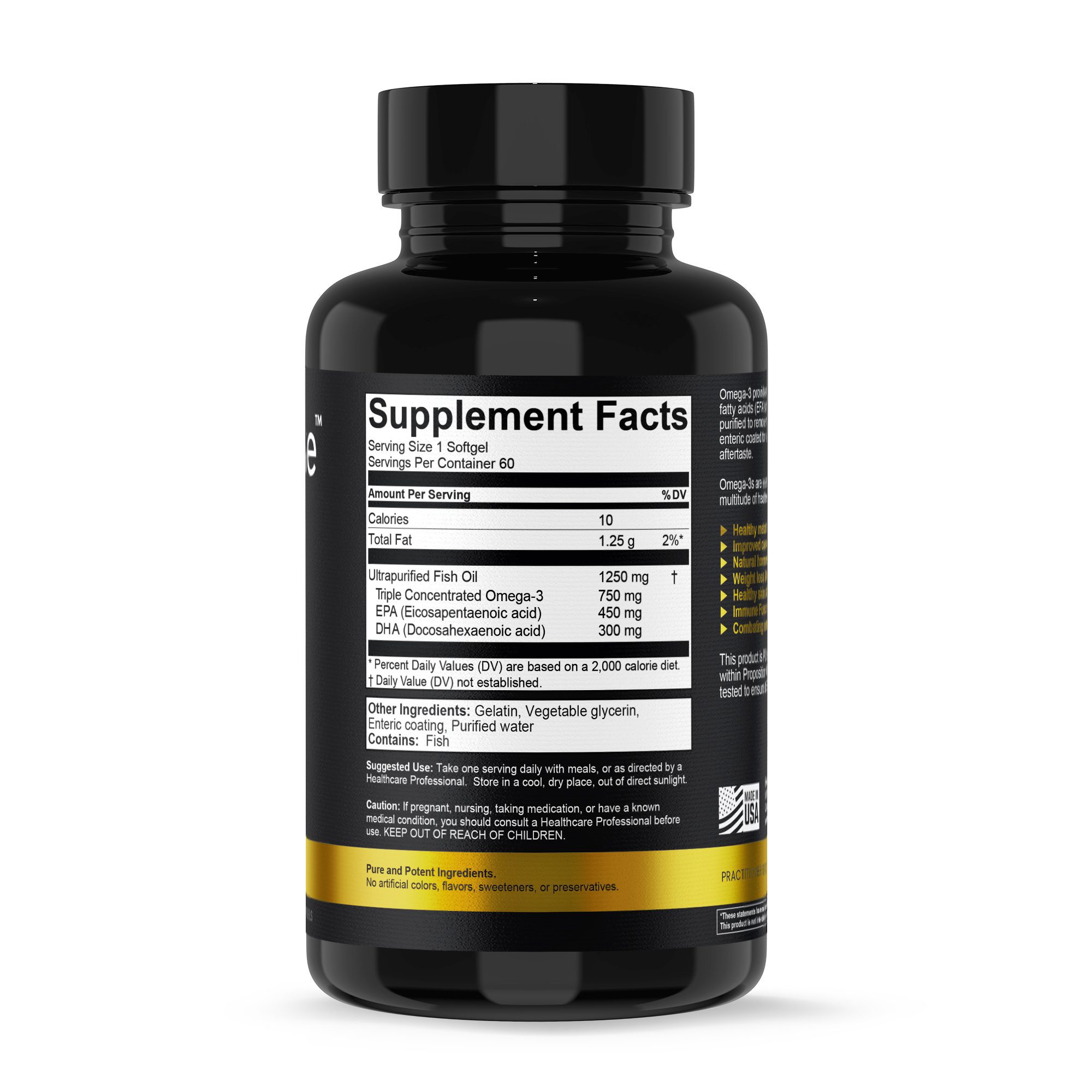

OMEGA-3
Triple Strength Fish Oil
Available in: 60 ct Enteric Coated Softgels
Benefits:- Promotes healthy metabolism*
- Improves cardiovascular & brain health*
- Supports weight loss & healthy cholesterol*
- Promotes healthy skin and hair*
- Supports immune function*
- Combats inflammation*
FREE FROM

Wheat, Soy,
Eggs

Artificial Colors, Sweeteners & Flavors

GMO FREE

Unnecessary Binders &
Fillers

Tree Nuts, Peanuts
& Sesame

Magnesium
Stearate

Gluten Free

Trans Fat &,
Hydrogenated Oils
Omega-3 from MEDThrive™ provides pure, essential fatty acids (EFA’s) with 3X the potency of common fish oils softgels, derived from cold water fish and purified to remove harmful contaminants. The softgels are also enteric coated so they have no fishy aftertaste and this coating protects the oil as it passes through your stomach. Omega-3s are essential to daily health and offer a multitude of health benefits.
- Enteric Coated to reduce fishy aftertaste
- BSE/TSE Free
- This product is PCB tested and within Proposition 65 limits
Take one serving daily with meals, or as directed by a healthcare professional.
Warning: If pregnant, nursing, taking medication or have a known medical condition, consult a Healthcare Professional before use.
Contains: Fish
Omega-3 fatty acids have been extensively studied and have shown to offer profound implications for health, particularly for cardiovascular, joint function and inflammation.
Extensive research supports the positive impact of omega-3 fatty acids on heart health, with evidence suggesting they help reduce triglyceride levels, lower blood pressure, and promote arterial health (Kris-Etherton et al., 2002).
Evidence also suggests they may have anti-inflammatory effects which also contributes to cardiovascular health. In addition, there is substantial evidence of their positive impact on inflammation and joint health too. Studies further show they have been proven to help effectively manage inflammation throughout the whole body (Calder, 2015).
Besides helping manage inflammatory conditions such as arthritis (James et al., 2017), Omega-3 fatty acids, particularly EPA (eicosapentaenoic acid) and DHA (docosahexaenoic acid), also support cognitive function and reduce the risk of chronic diseases. EPA and DHA have been clinically shown to have a positive impact on cholesterol levels by promoting an increase in high-density lipoprotein (HDL) cholesterol, often referred to as “good cholesterol.” Higher HDL levels play a protective role in cardiovascular health by removing excess cholesterol from the bloodstream and transporting it to the liver for excretion. Several studies have demonstrated that omega-3 fatty acids contribute to favorable changes in lipid profiles by reducing triglyceride levels. These effects contribute to the potential cardioprotective properties of omega-3 fatty acids. Incorporating omega-3s into one’s diet through sources like fish or supplements can be a valuable strategy for promoting overall health, supporting joint function, and managing inflammation.
Unfortunately, it is estimated that as many as 90% of adults fall short in getting enough of these important fatty acids. Omega-3s, categorized as long-chain polyunsaturated fatty acids (PUFAs), are recognized as “good fats” due to their roles in cell membrane structure, support for heart and joint functions, and involvement in vital metabolic processes. Because the body cannot synthesize omega-3s on its own, they are deemed essential and must be acquired through dietary sources or supplements. To address this nutritional gap, the American Heart Association advocates the consumption of at least 8 oz. of fish twice a week to enhance omega-3 intake (Kris-Etherton et al., 2002).* This recommendation underscores the importance of incorporating these beneficial fatty acids into one’s diet to support overall health.
OMEGA-3 is a superior, concentrated fish oil.
1.Triple Strength EPA & DHA: Supports Cardiovascular, Cholesterol & Brain Health*
OMEGA-3 from MEDThrive offers 3X the potency of EPA & DHA vs. common fish oil softgels. Growing evidence continues to demonstrate that higher doses of EPA and DHA are safe, well-tolerated, and more effective than small doses for promoting positive health changes. The positive impact of EPA and DHA on brain health has become a strong focus for scientific study. A 2022 scientific review published in Cureus stated these have “an essential impact on cognitive performance at all stages of life”. This review concluded that “Ingestion of omega-3 fatty acids increases learning, memory, cognitive well-being, and blood flow in the brain. Omega-3 treatments are advantageous, well-tolerated, and risk-free.”
2. Ultra-Filtered Fish Oil: Supports Skin, Hair, Joint & Immune Health*
This fish oil is manufactured under the strictest quality standards and 3rd party tested to be free of contamination. The fish oil is derived exclusively from small seawater fish. This means that these fish have less potential for heavy metals such as mercury. In addition, The benefits of omega-3 fatty acids extend to skin and hair health. Research has shown it may protect the skin against sun damage, lower acne risks, improve dry skin and possibly improve hair growth. DHA, a major component of skin, contributes to its structure and function, promoting hydration and supporting a healthy complexion (Cosgrove et al., 2007). Additionally, omega-3s may play a role in maintaining healthy and lustrous hair (Pilkington et al., 2014).
In addition, the anti-inflammatory properties of omega-3s contribute to joint health, offering relief for individuals with inflammatory conditions such as rheumatoid arthritis (James et al., 2017).
The impact of omega-3 fatty acids on immune health is noteworthy, as research suggests that they may enhance immune function by modulating inflammation and supporting the body’s defense mechanisms (Calder, 2015). Omega-3’s ability to help lower inflammation may be at the center of why they provide support to one’s immune function and aid in subsequently lowering cardiovascular risk as well. A recent study demonstrated that “omega-3 fatty acid supplementation improves the TH1/TH2 ratio of lymphocytes which boosts immune function in individuals associated with an increased risk to heart disease.” In addition, omega-3 fatty acids can influence the production and activity of immune cells, particularly macrophages and T cells, leading to a dampened inflammatory response. By modulating immune cell behavior, omega-3 fatty acids help maintain a balanced immune system.
3. High Potency Omega-3: Combats Inflammation, Supports Healthy Metabolism*
The positive impact Omega-3 fatty acids have on inflammation is widely accepted. Their anti-inflammatory properties make them a valuable tool to combat chronic inflammation, a factor associated with various chronic diseases (Calder, 2017). As stated earlier, EPA and DHA, are renowned for playing a pivotal role in modulating the body’s inflammatory response. These fatty acids are precursors to specialized pro-resolving lipid mediators (SPMs), such as resolvins and protectins, which actively promote the resolution of inflammation. SPMs derived from omega-3 fatty acids not only suppress the production of pro-inflammatory cytokines but also facilitate the clearance of inflammatory cells, contributing to the restoration of tissue homeostasis. Studies have shown that omega-3 fatty acids can attenuate inflammatory pathways, offering potential therapeutic benefits in various inflammatory conditions.
Furthermore, omega-3 fatty acids counteract the pro-inflammatory effects of omega-6 fatty acids, which are more prevalent in Western diets. The balance between omega-3 and omega-6 fatty acids is crucial for maintaining a healthy inflammatory status. An imbalance, favoring omega-6 fatty acids, can contribute to chronic inflammation and various inflammatory diseases. Omega-3 fatty acids, with their anti-inflammatory properties, can help restore this balance and mitigate the inflammatory response.
OMEGA-3 by MEDThrive also supports healthy metabolism by influencing or enhancing insulin sensitivity and glucose metabolism, potentially reducing the risk of type 2 diabetes (Lalia et al., 2016). Insulin sensitivity is crucial for the efficient utilization of glucose and the prevention of insulin resistance. This improved insulin sensitivity positively influences metabolic rate and can help in maintaining optimal body weight. Moreover, because omega-3 fatty acids modulate inflammatory pathways, they can positively impact metabolic health. Chronic inflammation is closely linked to metabolic disorders such as obesity and insulin resistance. Additionally, Omega-3s are vital for overall endocrine balance because they are building blocks from which your body makes nearly all your hormones,
Furthermore, omega-3 fatty acids are known to influence gene expression related to metabolism. They activate genes involved in energy expenditure and fat metabolism, promoting a balanced and efficient metabolic profile. By enhancing the expression of genes involved in lipid metabolism and mitochondrial function, omega-3 fatty acids contribute to the maintenance of a healthy metabolic rate.
4. Enteric Coated: Reduces Fishy Aftertaste and Improves Bioavailability
Enteric coating for fish oil supplements provides a valuable solution to address the issue of potential gastric discomfort associated with fish oil consumption. The enteric coating is designed to resist dissolution in the acidic environment of the stomach, ensuring that the supplement reaches the intestines before breaking down. This bypasses the stomach, where the release of omega-3 fatty acids could sometimes cause burping or reflux, mitigating the likelihood of these side effects. By allowing the fish oil to be absorbed in the small intestine, enteric coating enhances the overall absorption of omega-3 fatty acids, optimizing their bioavailability and maximizing the potential health benefits without causing gastrointestinal discomfort.*
Kris-Etherton, P. M., Harris, W. S., & Appel, L. J. (2002). Fish consumption, fish oil, omega-3 fatty acids, and cardiovascular disease. Circulation, 106(21), 2747–2757.
Mozaffarian, D., & Wu, J. H. (2011). Omega-3 fatty acids and cardiovascular disease: effects on risk factors, molecular pathways, and clinical events. Journal of the American College of Cardiology, 58(20), 2047–2067.
Skulas-Ray, A. C., Kris-Etherton, P. M., Harris, W. S., Vanden Heuvel, J. P., Wagner, P. R., & West, S. G. (2011). Dose-response effects of omega-3 fatty acids on triglycerides, inflammation, and endothelial function in healthy persons with moderate hypertriglyceridemia. The American Journal of Clinical Nutrition, 93(2), 243–252.
Cosgrove, M. C., Franco, O. H., Granger, S. P., Murray, P. G., & Mayes, A. E. (2007). Dietary nutrient intakes and skin-aging appearance among middle-aged American women. The American Journal of Clinical Nutrition, 86(4), 1225–1231.
Pilkington, S. M., Watson, R. E., Nicolaou, A., & Rhodes, L. E. (2014). Omega-3 polyunsaturated fatty acids: photoprotective macronutrients. Experimental Dermatology, 23(1), 12–15.
James, M. J., Proudman, S. M., Cleland, L. G., & James, M. (2017). Fish oil and rheumatoid arthritis: past, present and future. In Fatty Acids (pp. 239-258). Springer.
Calder, P. C. (2015). Marine omega-3 fatty acids and inflammatory processes: Effects, mechanisms and clinical relevance. Biochimica et Biophysica Acta, 1851(4), 469–484.
Calder, P. C. (2017). Omega-3 fatty acids and inflammatory processes: from molecules to man. Biochemical Society Transactions, 45(5), 1105–1115.
Lalia, A. Z., Dasari, S., Robinson, M. M., Abid, H., Morse, D. M., Klaus, K. A., … & Lanza, I. R. (2016). Influence of omega-3 fatty acids on skeletal muscle protein metabolism and mitochondrial bioenergetics in older adults. Aging, 8(12), 3342–3358.
Kris-Etherton, P. M., Harris, W. S., & Appel, L. J. (2002). Fish consumption, fish oil, omega-3 fatty acids, and cardiovascular disease. Circulation, 106(21), 2747–2757.
Ibrahim M Dighriri, Abdalaziz M Alsubaie, Fatimah M Hakami, Dalal M Hamithi, Maryam M Alshekh, Fatimah A Khobrani, Fatimah E Dalak, Alanoud A Hakami, Efham H Alsueaadi, Laila S Alsaawi, Saad F Alshammari, Abdullah S Alqahtani, Ibrahim A Alawi, Amal A Aljuaid, Mohammed Q Tawhari. Cureus. 2022 Oct; 14(10): e30091. Effects of Omega-3 Polyunsaturated Fatty Acids on Brain Functions: A Systematic Review.
Jeffrey S. Bland, PhD, FACN, FACB. Integr Med (Encinitas). 2022 Nov; 21(5): 14–18. Therapeutic Use of Omega-3 Fatty Acids for Immune Disorders In Search of the Ideal Omega-3 Supplement.
Jump, D. B. (2011). The biochemistry of n-3 polyunsaturated fatty acids. Journal of Biological Chemistry, 286(21), 18607-18613.
Serhan, C. N., Chiang, N., & Van Dyke, T. E. (2008). Resolving inflammation: Dual anti-inflammatory and pro-resolution lipid mediators. Nature Reviews Immunology, 8(5), 349-361.
Simopoulos, A. P. (2002). Omega-3 fatty acids in inflammation and autoimmune diseases. Journal of the American College of Nutrition, 21(6), 495-505.
Medications like Ozempic®, Wegovy® (Semaglutide), Trulicity® (Dulaglutide), and Mounjaro® (Tirzepatide) belong to the class of drugs called GLP-1 analogs. In the body, the hormone GLP-1 stimulates multiple biochemical reactions which regulate digestion and appetite. These medications work by mimicking the effects of natural GLP-1 produced by the body to help patients control blood sugar, lose weight and improve their health.
These GLP-1 medications provide the following mechanisms to help patients lose weight:
- Reduce appetite: GLP-1 is naturally released when you eat food, signaling the brain that you are full. Semaglutide mimics this by binding to the same receptors in the brain, making you feel full, reducing appetite and as a result you eat & drink less.
- Slow Gastric Emptying: Not only does the GLP-1 medications signal the brain that you are full but they also significantly slow down stomach emptying and can cause Gastroparesis. Studies show slow intestinal motility as well.
- Lower Blood Sugar: GLP-1 medications lower blood glucose two ways. They increase the amount of insulin produced by the pancreas and decrease the amount of glucagon produced by the liver. By driving glucose out of the blood (insulin) and not replacing it from the liver (glucagon), the drugs effectively lowers blood sugar, increasing fat utilization especially when combined with diet and exercise.
Despite the effectiveness of these medications, most patients experience uncomfortable side-effects. Including:
- Nausea
- Bloating
- Gas
- Abdominal pain
- Diarrhea
- Constipation
- Fatigue
- Dehydration
- Muscle loss
Clinical trials have reflected that GI complaints (Including Gastroparesis) are the main adverse-event related cause of GLP-1 drug discontinuation. Nausea is reported most commonly, with over 50% of patients reporting this complaint. As a result of these uncomfortable side-effects, maintaining patient compliance is critical for long term obesity treatment and ultimately the key to patient weight loss success.
GLP-1 agonists are undoubtedly weight loss success medications. However, they also come with a range of side effects. Integrating the use of these medications with carefully selected nutrients can dramatically improve patient outcomes by helping them continue on their path to their goal weight easier. In other words, protecting against or soothing these side effects can significantly boost patient compliance, patient comfort and weight loss results.
GLP-1 medications signal your brain to slow digestion and make you feel full. However, slow gastric emptying can cause nausea, bloating, gas, diarrhea/constipation and more.